What M&A advisors are saying about AI, workflow automation, and virtual data rooms in 2026 - An M&A Source Spring Conference recap
Deal volume is back, AI is now a daily workflow, and the advisors pulling ahead aren't working harder, they're working with better systems. Here's what we heard at the M&A Source conference.
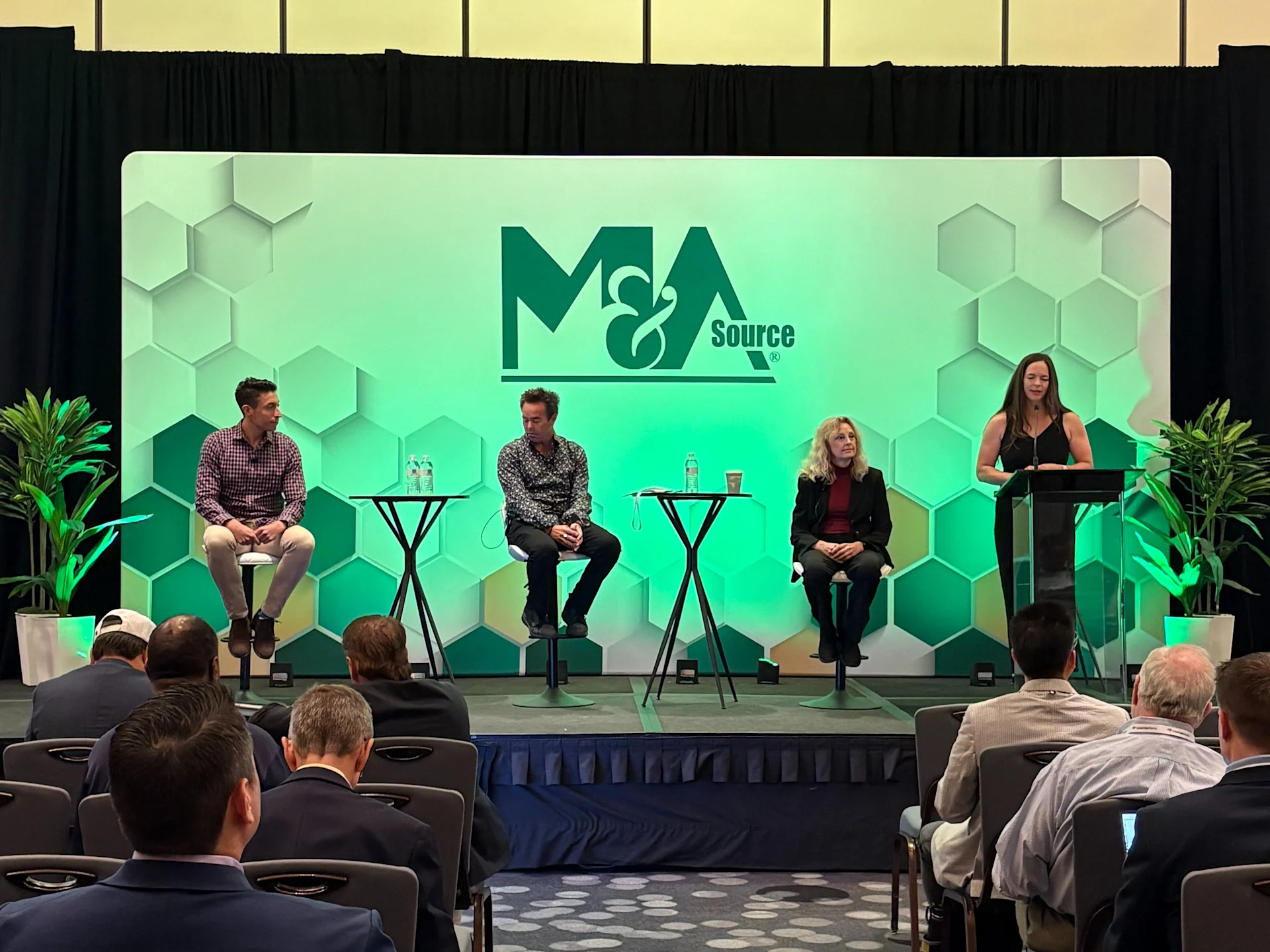
We just got back from the M&A Source Spring Conference in Minneapolis, and the conversations we had on the floor were some of the most energizing in recent memory.
If you're not familiar: M&A Source is the leading nonprofit association for lower middle market M&A advisors, intermediaries, and investors. Founded in 1991, it brings together transaction professionals twice a year for education, deal-making, and networking.
Think of it as the place where the most active dealmakers in the lower middle market come to share what's working, learn from each other, and connect with investors and service providers. The Dropbox DocSend team spent time with some of the industry's most active advisors to talk due diligence, technology, and where the business is headed.
TL;DR: deal volume is back, AI has gone from buzzword to daily workflow, and the advisors pulling ahead aren't the ones working harder, they're the ones working with better systems.
Here's what stood out.
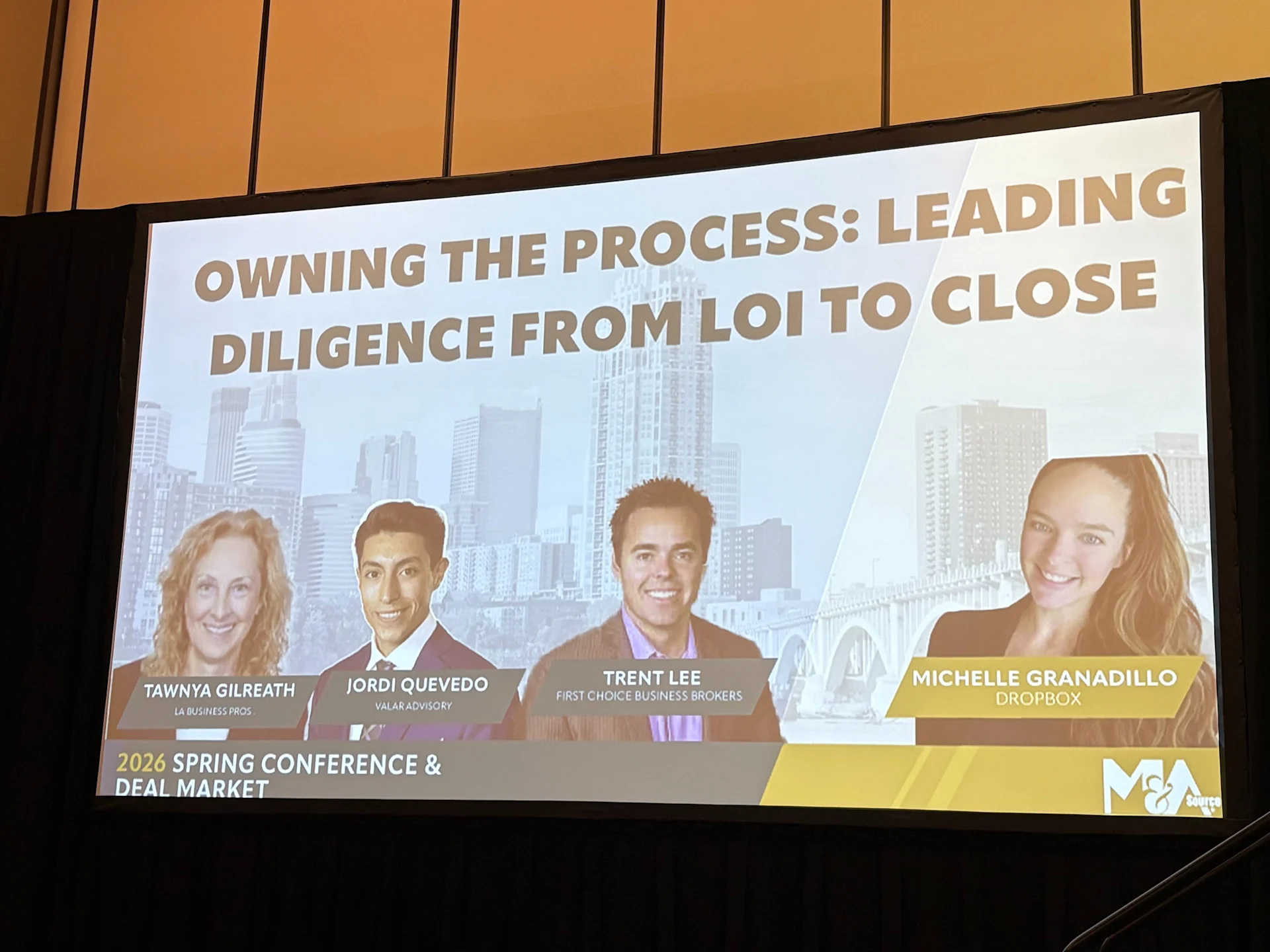
Deal volume is back, and M&A advisors are feeling the pressure
After a slow 2025 shaped by regulatory uncertainty and tariff risk, private equity is off the sidelines. M&A advisors across the board are reporting a significant uptick in transaction activity over the last six to nine months.
One advisor shared the numbers from a recent process: 156 interested parties, 40 signed NDAs, and ultimately one buyer who advanced into diligence. The biggest challenge isn't generating buyer interest anymore, it's managing that volume without letting anything slip through the cracks.
And make no mistake: this business is still built on relationships. The advisors who win the best deals are the ones with the deepest trust, the sharpest instincts, and the strongest networks. That hasn't changed.
What has changed is the volume. And volume is where great advisors can lose ground, not because they lack the relationships, but because they don't have the systems to support them. Brokers who incorporate more automation and AI into their workflows aren't replacing the relationship; they're protecting it. They can say yes to more deals, respond faster, and show up better for every client because they're not drowning in manual processes.
The advisors who thrive in this environment aren't choosing between relationships and systems. They're using better systems to make their relationships go further.
AI tools for M&A advisors have moved from "interesting" to indispensable
Perhaps the most striking theme at M&A Source wasn't about any single tool, it was about who's using AI. As one workshop speaker put it, "unlike the dot-com era where 25-year-olds built the websites, today's AI adoption is being driven directly by the brokers and advisors themselves."
Around 50% of the advisors we spoke with are actively using tools like ChatGPT or Claude in their day-to-day work. About 20% are already operating at a more advanced level, leveraging MCP connectors to hook AI directly into their deal workflows.
The use cases are practical and immediate:
Reviewing and redlining NDAs
Summarizing communications and drafting responses to buyer requests
Identifying next steps and tracking whose court the ball is in
Setting up virtual data room folder structures automatically from uploaded diligence lists
Recording seller interviews and using transcripts to generate CIMs and FAQs, saving hours per deal
One pattern that came up more than once: advisors want to use AI themselves, but they're cautious about their buyers and sellers using it. The concern is that AI-generated responses can be half-baked and end up slowing the deal process down. The takeaway is clear: AI in M&A is most valuable when it's in the hands of experienced practitioners who guide it, not when it replaces their judgment.
Connected AI workflows and MCP connectors are becoming the expectation
MCP connectors came up organically in multiple conversations, and that's notable. But what advisors are really describing isn't a technology request, it's a workflow one.
Many of them are already doing a version of this. They've built Zapier workflows that pull DocSend engagement data into their CRM, trigger follow-ups when a buyer opens a deck, or flag when a document hasn't been viewed in a week. It tells us something important: advisors aren't waiting for a perfect solution. They're stitching one together because the need is real.
What they're asking for now is a more seamless version of that same idea. Instead of managing a web of manual connections, they want their deal tools talking to each other automatically, so a question like "which buyers are most engaged?" pulls a live answer from their documents, inbox, and data room all at once.
That's the direction we're thinking about at DocSend. We're paying close attention to where these workflows break down and what it would look like to make them feel effortless; not just for the technically adventurous, but for every advisor managing a full pipeline.
M&A workflow automation separates top performers from everyone else
One of the most popular sessions was Trent Lee's (First Choice Business Brokers) presentation on automating the buyer and seller journey. The core message resonated throughout the room: top-performing M&A advisors rely on systems, not memory.
Trent's workflow got a lot of attention, and for good reason. He's already using DocSend alongside Zapier to automate exactly the kind of follow-up that most advisors are still doing manually. When a buyer spends 10 minutes reviewing a document in DocSend, that engagement data automatically triggers a follow-up email through his CRM. No manual check-ins, no guesswork about who's warm. The system handles it.
CRM connectivity is a big part of what makes this work. DocSend's visit data integrates with your CRM, and with a Zapier workflow connecting the two, you can build automations that respond to buyer behavior in real time. The advisors who've set up these kinds of automations describe them as game-changers for staying responsive without adding hours to their week.
If you're evaluating tools, it's worth prioritizing ones that integrate with the CRM you already use and offer robust virtual data room capabilities in the same workflow. The all-in-one tools can be convenient, but advisors who've used them alongside dedicated data room solutions tend to notice the difference in functionality.
AI skepticism is fading, and privacy still matters
Privacy concerns around AI came up at the conference, but the conversation has shifted. Advisors are no longer asking whether to use AI, they're asking how to use it responsibly. The focus has moved from skepticism to discernment: which tools can be trusted with sensitive deal data, and which can't.
That's the right question to ask. Not all AI tools handle your data the same way. For M&A advisors working with confidential financials, buyer lists, and diligence materials, it's worth verifying that any AI tool you use keeps your data in a closed environment. Some platforms use your data to train or improve their underlying models, something most advisors would find unacceptable given the sensitivity of what moves through a deal workflow.
DocSend doesn't do that. Your data isn't used to build or train generative AI models, it stays yours. As AI becomes a standard part of how advisors manage deals, that kind of commitment to data privacy is becoming just as important as ease of use. It's a detail worth asking about before you add any new tool to your stack.
The bottom line
The lower middle market is moving fast. Deal volume is up, buyer funnels are bigger than ever, and the technology expectations of advisors have fundamentally shifted. The advisors we spoke with at M&A Source aren't waiting for AI to mature, they're already building it into their daily workflows.
The advisors pulling ahead share a common thread: they've stopped relying on memory and started building systems. If you're not thinking about how your tools connect, automate, and protect your deal data, now is the time to start. The DocSend team continues to prioritize the workflows that help you close deals faster.
We'll see you at the next one.
Über den Autor